Medieval India
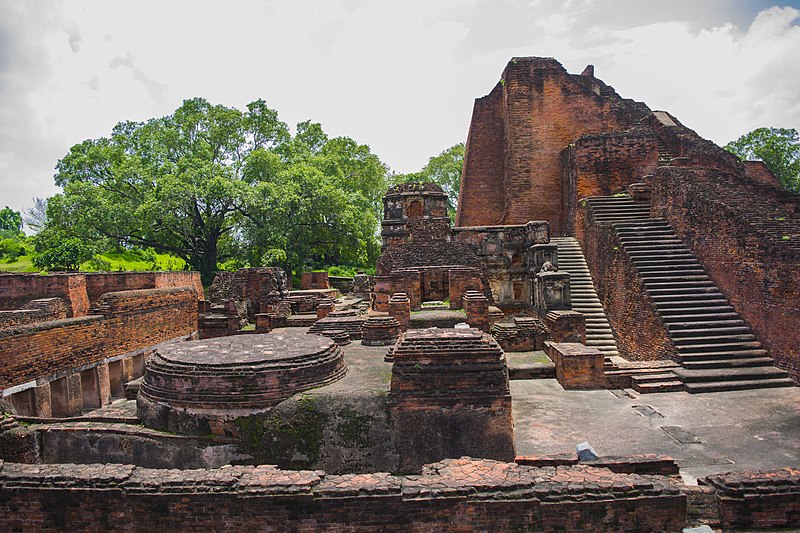
This workshop will focus on developments in India and across South Asia in the medieval period. The Silk roads and maritime trade routes that began in the ancient times continued during this period. We will introduce students to the northern and southern silk trading roads across Asia, with links to the Middle East and Europe. We will bring with us examples of some of the items that were traded on the silk and other trade routes – silks and other textiles, sugar and spices and other foodstuff, precious metals, ceramics, bronzes, etc. For one activity, students will draw a map of all the countries, places, and objects that are traded along the Silk roads. Next, we will focus on the universities that sprang up in north India. Nālandā University was the first university in the world. Nālandā began as a Buddhist monastery, and grew to become a university, with over one hundred lessons per day. Much of what was taught there was about Buddhism, Buddhist philosophy, for instance, but other things were taught as well, such as Sanskrit language. We will show students the remains of Nālandā as it is today, and go on a virtual tour of how impressive it once was. We will briefly introduce students to the Sanskrit language, and teach them some characters. Students will then learn how to write their own names in Sanskrit.
Curriculum for Excellence subjects and skills:
SOC 2-09a: Having explored the ways journeys can be made, I can consider the advantages and disadvantages of different forms of transport, discussing their impact on the environment.
SOC 2-14a: To extend my mental map and sense of place, I can interpret information from different types of maps and am beginning to locate key features within Scotland, UK, Europe or the wider world.
RME 2-07a: I am developing respect for others and my understanding of their beliefs and values.
National Curriculum subjects and skills:
History: Learning about some characteristic features of past non-European societies and their achievements. Understanding significant aspects of the history of the wider world, understanding similarity and differences between cultures and societies, drawing contrasts.
Geography: Naming some of the worlds’ continents and oceans. Engaging with maps and globes. Drawing a map of the countries and continents of the Silk Roads
Art: Learning about artists and architects in history, about the history of art, craft and design, including periods from ancient times up to the medieval period.
Science: Learning about different materials and their suitability and usages.
RE: Understanding Buddhist beliefs. Developing understanding of concepts and mastery of skills to make sense of religion and belief.